
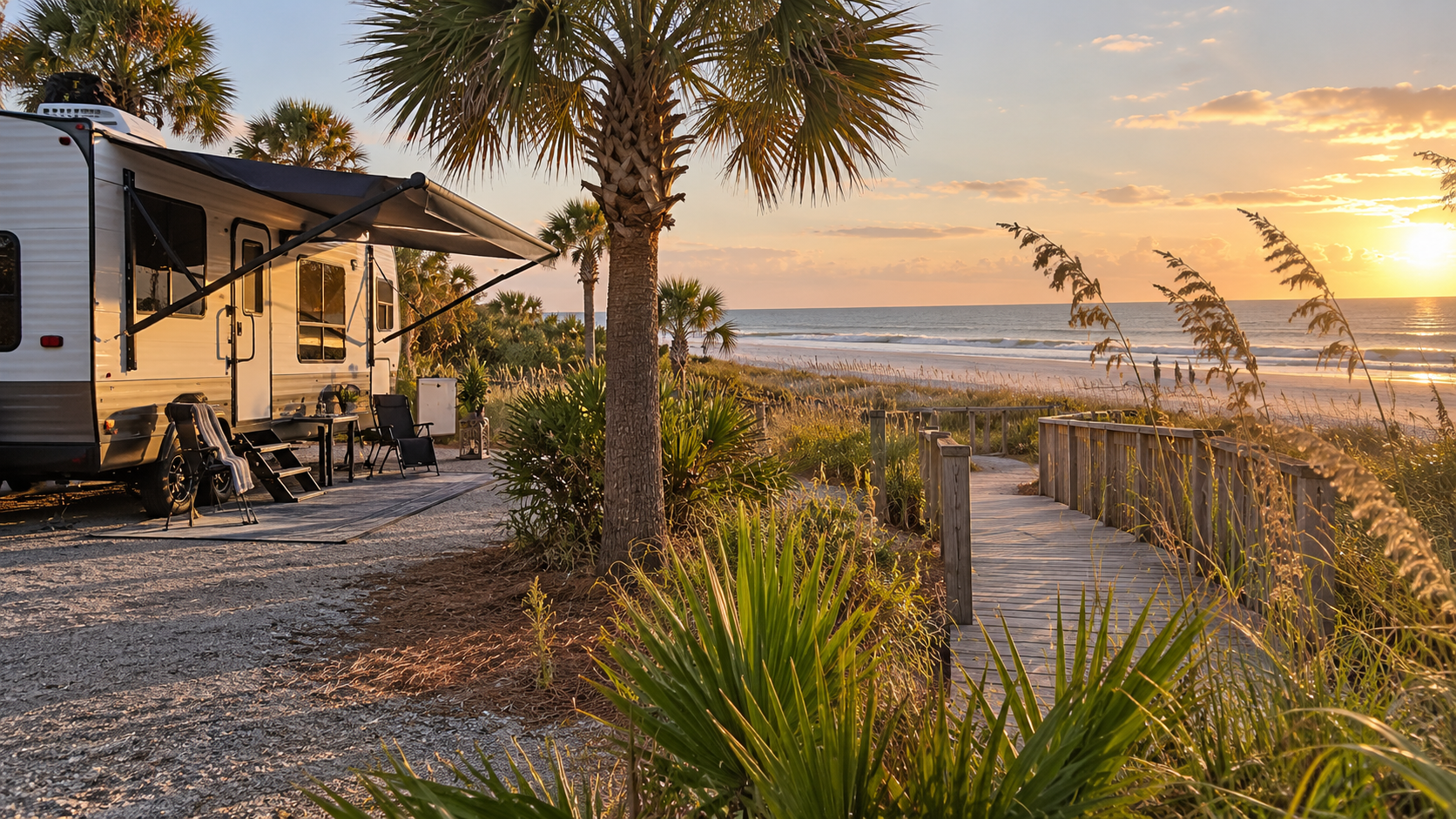
What Is the Best RV for Camping on the South Carolina Coast?
For most campers, a lightweight to mid-weight travel trailer or small fifth wheel is the best RV for camping on the South Carolina coast. They're easier to fit into the size-restricted sites common at beachfront state parks, simpler to evacuate quickly during hurricane season since you can unhitch and go, and better suited to the sandy, sometimes narrow roads leading into barrier island campgrounds. Motorhomes work well too, especially for buyers who don't want to tow, but towable RVs offer the most flexibility for how SC coastal camping actually works.
Here's the full breakdown of why, along with what to look for in an RV built for the Lowcountry's heat, humidity, and salt air.
What Makes Coastal South Carolina Different for RV Camping?
Coastal South Carolina camping comes with a few environmental factors that inland camping doesn't, and they directly affect which RV makes the most sense.
Heat and humidity. Summers along the coast run hot and heavy with moisture, which puts real demand on an RV's air conditioning and ventilation. Units with underpowered AC or poor insulation feel it fast.
Salt air. Salt air accelerates corrosion on metal components, hitches, undercarriage hardware, and exterior fixtures. RVs with corrosion-resistant materials and regular rinse-downs hold up noticeably better near the water.
Bugs. No-see-ums and mosquitoes are a real part of coastal camping, especially near marshland and maritime forest areas. Tight-sealing screens and doors matter more here than they do camping in the mountains.
Site size restrictions. Many of the coast's most popular beachfront state park campgrounds have length restrictions on individual sites, since these parks were built decades before today's larger RVs became common. A trailer or motorhome that's too long may not fit the sites you actually want.
Hurricane season. Coastal camping means planning around the Atlantic hurricane season, roughly June through November. Being able to break camp and evacuate quickly is a real practical consideration, not just a hypothetical one.
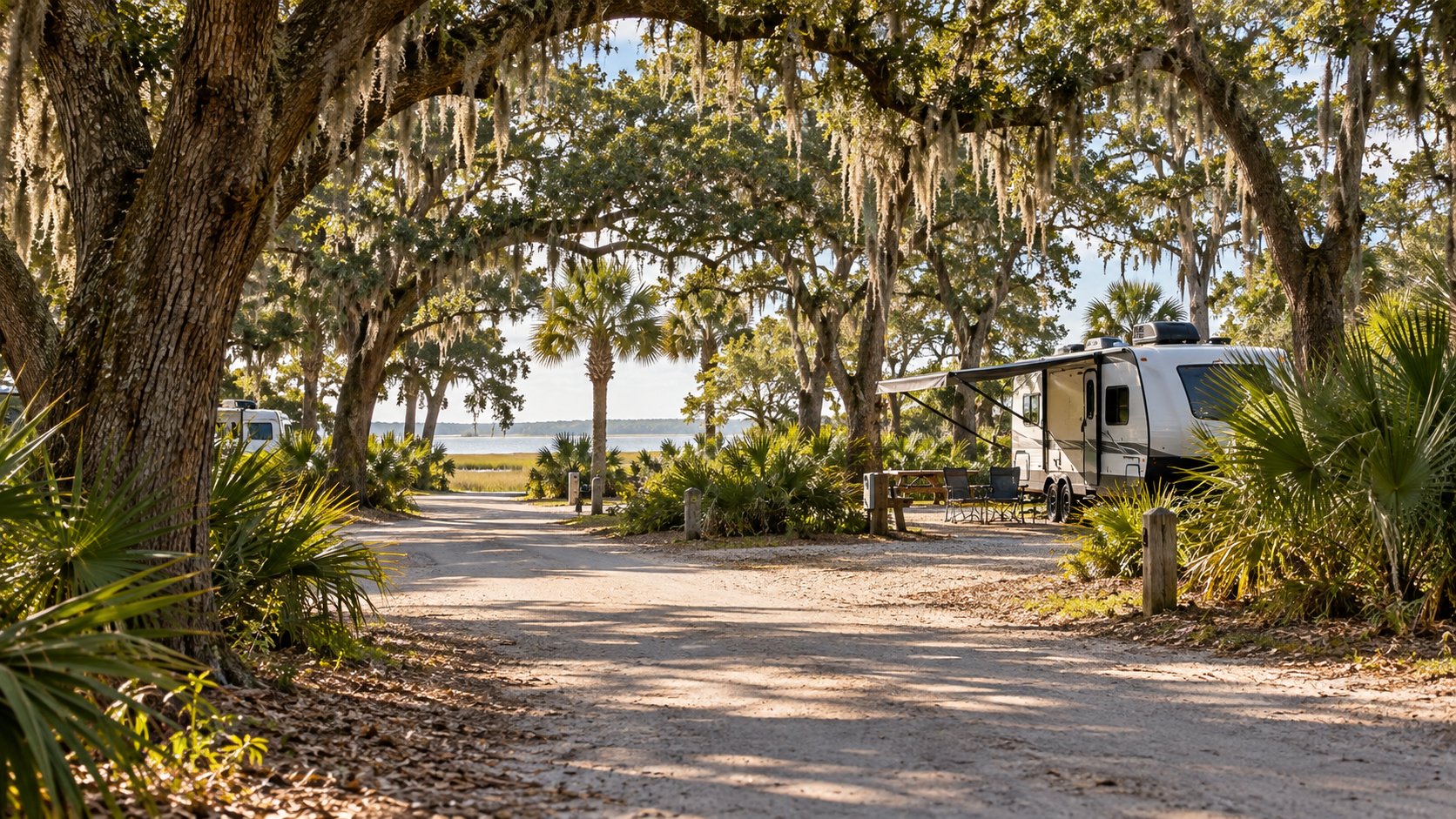
Which Type of RV Is Best for South Carolina Coastal Camping?
A lightweight to mid-weight travel trailer is generally the best overall choice for South Carolina coastal camping, because it balances towing flexibility, site compatibility, and evacuation speed better than heavier options.
Here's how each RV type stacks up for coastal SC conditions:
Travel trailers
Fit into more of the size-restricted sites at beachfront state parks
Can be unhitched and left at the campsite while you explore with the tow vehicle
Easier and faster to evacuate ahead of a storm since you're not driving the living space itself
Wide range of sizes means you can match the trailer to your specific tow vehicle and group size
Best for: couples, families, and buyers who want flexibility without driving a large vehicle
Fifth wheels
More living space and storage than most travel trailers, good for extended coastal stays
Requires a truck with a bed-mounted hitch, which limits tow vehicle options
Larger footprint can be harder to fit into some of the more compact coastal state park sites
Best for: buyers with a capable truck who want more room for longer coastal trips
Class A motorhomes
Comfortable, residential-style living space and strong AC systems for coastal heat
Length and turning radius can be a real challenge on narrow barrier island roads and in tighter campground loops
Slower and more involved to break camp and evacuate compared to a towable
Best for: buyers prioritizing comfort and driveability who plan to stay at larger, full-service campgrounds rather than compact beachfront sites
Class B and Class C motorhomes
Smaller footprint than a Class A, easier to maneuver on coastal roads and into tighter sites
Class B especially is nimble enough for exploring historic downtown areas and narrow island access roads
Less storage and living space than a travel trailer or fifth wheel of similar length
Best for: solo travelers, couples, and buyers who want to drive and camp without towing
Truck campers
Extremely compact and capable of reaching more remote or less-developed coastal access points
Limited living space compared to towable options
Best for: buyers who prioritize mobility and minimal footprint over interior space
If you're weighing a travel trailer against a fifth wheel or motorhome for coastal use, our team can walk through the trade-offs based on your tow vehicle and how you plan to camp. You can browse all RV types in our full inventory to compare footprints side by side.
What Should You Look for in an RV for Humid, Salty Coastal Air?
The most important features for coastal SC camping are a strong, properly sized air conditioning system, corrosion-resistant exterior materials, and tight door and window seals.
A few specific things worth prioritizing:
AC capacity matched to the trailer's size. Undersized AC units struggle to keep up with Lowcountry summer humidity, especially in units with darker exterior colors or larger windows.
Aluminum framing or composite sidewalls. These resist moisture absorption better than older wood-framed construction, which matters over years of coastal humidity exposure.
Sealed, well-maintained roofing. Salt air and humidity make roof seal maintenance even more important than it is inland. Plan on inspecting seals at least twice a year if you camp coastally often.
Corrosion-resistant hitch and undercarriage hardware. Rinsing the undercarriage after camping near saltwater helps, but starting with quality hardware reduces long-term wear.
Tight-sealing screens and doors. This keeps no-see-ums and mosquitoes out without forcing you to run the AC nonstop with everything closed up.
None of these features are exclusive to any one RV type. They're just worth checking regardless of whether you land on a travel trailer, fifth wheel, or motorhome.
Where Can You Camp with an RV on the South Carolina Coast?
South Carolina's coast offers a mix of state park campgrounds and private RV resorts, with a few standout spots within a reasonable drive of the greater Charleston area.
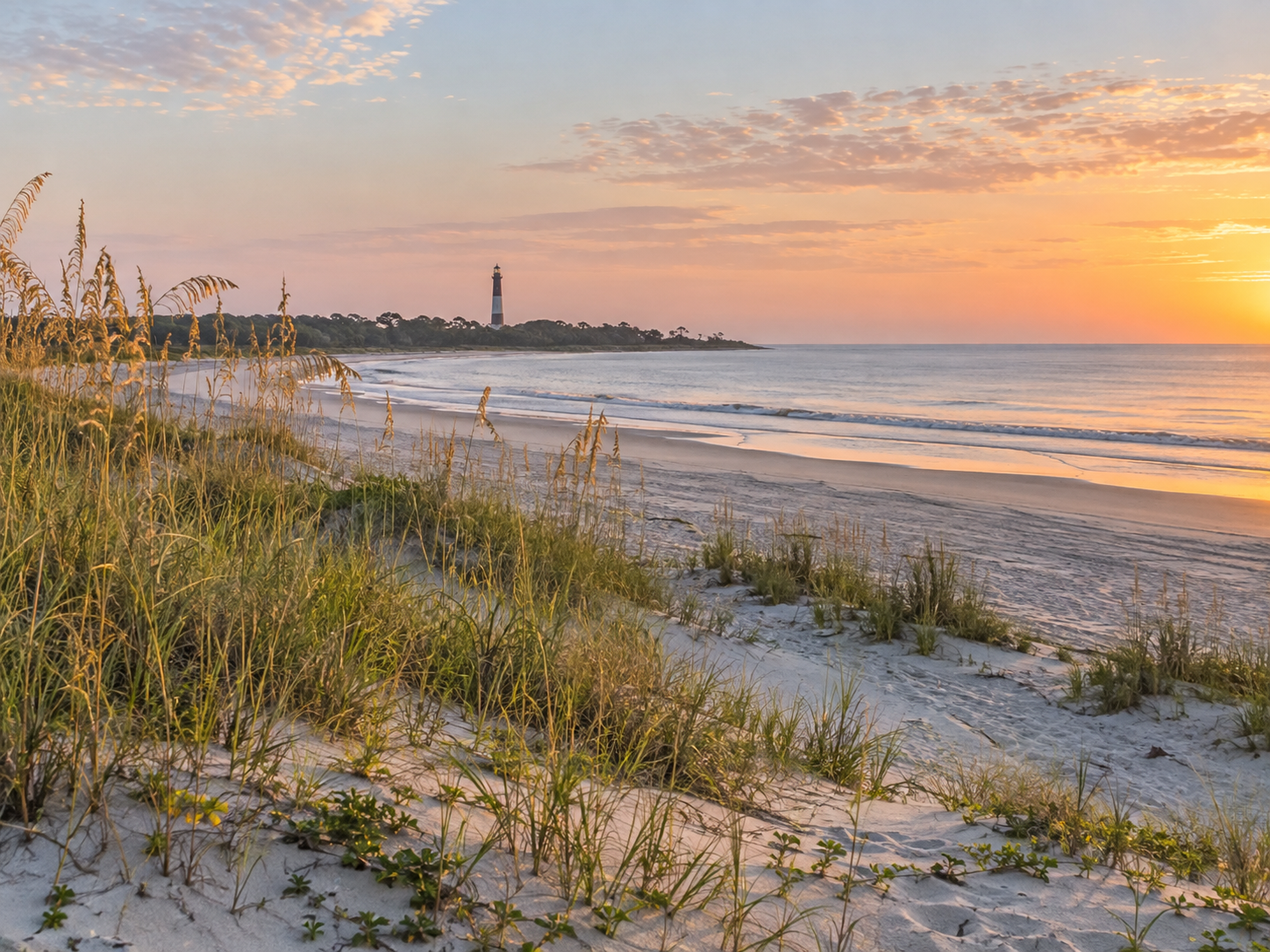
Edisto Beach State Park, on Edisto Island about an hour south of Charleston, offers both an oceanfront campground loop and a more shaded, inland loop under maritime live oaks, with the ACE Basin's marsh and forest ecosystem right nearby.
Hunting Island State Park, near Beaufort, is one of the most popular coastal state parks in South Carolina, known for its lighthouse, miles of beach, and lagoon. Sites here book up well in advance, especially during peak season.
Beyond the state parks, the coast has a range of private RV resorts and campgrounds closer to Charleston, Mount Pleasant, and the surrounding communities, many offering full hookups and larger sites for bigger rigs. Since site availability and size restrictions vary by park and by season, it's worth checking length limits before booking, especially if you're considering a larger travel trailer, fifth wheel, or Class A motorhome.
What Should You Consider Before Buying an RV for Coastal Camping?
Before buying an RV for South Carolina coastal camping, think through these factors:
Check site length restrictions at the specific parks and campgrounds you plan to visit most often.
Match your tow vehicle's capacity to the loaded weight of the trailer, not just the dry weight.
Prioritize AC capacity if you plan to camp through the summer months.
Ask about exterior construction materials and how they hold up to humidity and salt air over time.
Think through hurricane season logistics, including how quickly you could break camp if needed.
Consider storage between trips, since salt air exposure adds up even when the RV isn't in use.
Factor in road access if you plan to camp on barrier islands with narrower routes in and out.
Our tow guides page can help confirm your vehicle is properly rated before you commit to a specific travel trailer or fifth wheel.
What Mistakes Do Buyers Make When Choosing an RV for Coastal SC Camping?
The most common mistake is buying based on interior space alone without checking whether the RV will actually fit the campgrounds a buyer wants to visit most.
A few other mistakes we see regularly:
Overlooking length restrictions at popular beachfront parks like Hunting Island and Edisto Beach, then discovering after purchase that favorite sites aren't an option.
Underestimating AC needs. A unit sized for occasional mountain camping often struggles with Lowcountry summer humidity.
Not planning for hurricane season. Buyers who choose a large motorhome without thinking through evacuation logistics sometimes regret it during their first storm scare.
Skipping corrosion protection habits. Not rinsing the undercarriage after saltwater exposure accelerates wear on hitches, brakes, and hardware over time.
Choosing a tow vehicle after choosing the trailer, rather than the other way around, which can lead to a mismatch between what you own and what you actually need to tow safely.
How Coastal RV Center Can Help You Find the Right RV for the SC Coast
We're based right in the Lowcountry, so we work with buyers navigating exactly these coastal camping conditions every day. Our team can walk you through which travel trailer, fifth wheel, or motorhome fits your tow vehicle, your group size, and the specific parks and campgrounds you're planning to visit along the South Carolina coast.
Every RV on our lot goes through a pre-delivery inspection, and our service department is equipped to handle the maintenance that coastal conditions demand, from roof and seal checks to corrosion-related hardware service. We also offer financing options and accept trade-ins if you're upgrading to something better suited for coastal camping.
Browse our travel trailer, fifth wheel, and motorhome inventory online, or contact us to talk through what fits your coastal camping plans.
Frequently Asked Questions
Is a travel trailer or motorhome better for South Carolina beach camping?
A travel trailer is generally better for South Carolina beach camping because it's easier to fit into size-restricted state park sites and faster to evacuate ahead of a hurricane, since you can unhitch and leave the living space set up. A motorhome offers more driving comfort but can be harder to maneuver on narrow coastal roads and slower to break camp.
What size RV fits at South Carolina coastal state parks?
Site length limits vary by park and even by individual site within a park, so it's worth checking directly with the specific campground before booking. Many of South Carolina's beachfront state park campgrounds were built before today's larger RVs became common, so it's common for the most desirable oceanfront sites to have tighter length restrictions than newer private RV resorts.
How does humidity affect RVs on the South Carolina coast?
Humidity increases the workload on an RV's air conditioning system and raises the risk of moisture-related issues if roof seals and seams aren't well maintained. RVs with composite or aluminum-framed construction generally handle humid coastal conditions better over time than older wood-framed units, since they don't absorb moisture the same way.
Do I need to worry about salt air damaging my RV?
Salt air can accelerate corrosion on metal components like hitches, brakes, and undercarriage hardware over time. Rinsing the undercarriage after camping near saltwater and choosing corrosion-resistant hardware where possible both help reduce long-term wear.
What's the best RV for hurricane season camping on the coast?
A lighter travel trailer that can be quickly hitched and towed away is generally the most practical choice for camping during hurricane season, since evacuation speed matters more than living space in that scenario. If you camp coastally during hurricane season, it's worth planning your evacuation route and timeline before you ever need it.
Are there RV size restrictions at Edisto Beach or Hunting Island State Park?
Both parks have a mix of site types and sizes, and popular oceanfront and beachfront loops tend to book up well in advance, especially during peak season. It's best to check current site specifications directly with the park before finalizing an RV purchase if fitting into a specific campground is a priority.
Final Takeaway
The best RV for camping on the South Carolina coast is usually a lightweight to mid-weight travel trailer, thanks to its flexibility with site restrictions, easier hurricane season evacuations, and better maneuverability on coastal roads. Fifth wheels and motorhomes each have their place depending on how much space you need and whether you'd rather tow or drive, but for most Lowcountry campers, a well-matched travel trailer offers the best balance of comfort and practicality.
If you're trying to figure out which RV fits your coastal camping plans, stop by Coastal RV Center or browse our current inventory online. Our team knows this coastline and can help you find a setup that's actually built for it.