
What is the best travel trailer under 4,000 pounds?
What Is the Best Travel Trailer Under 4,000 Pounds?
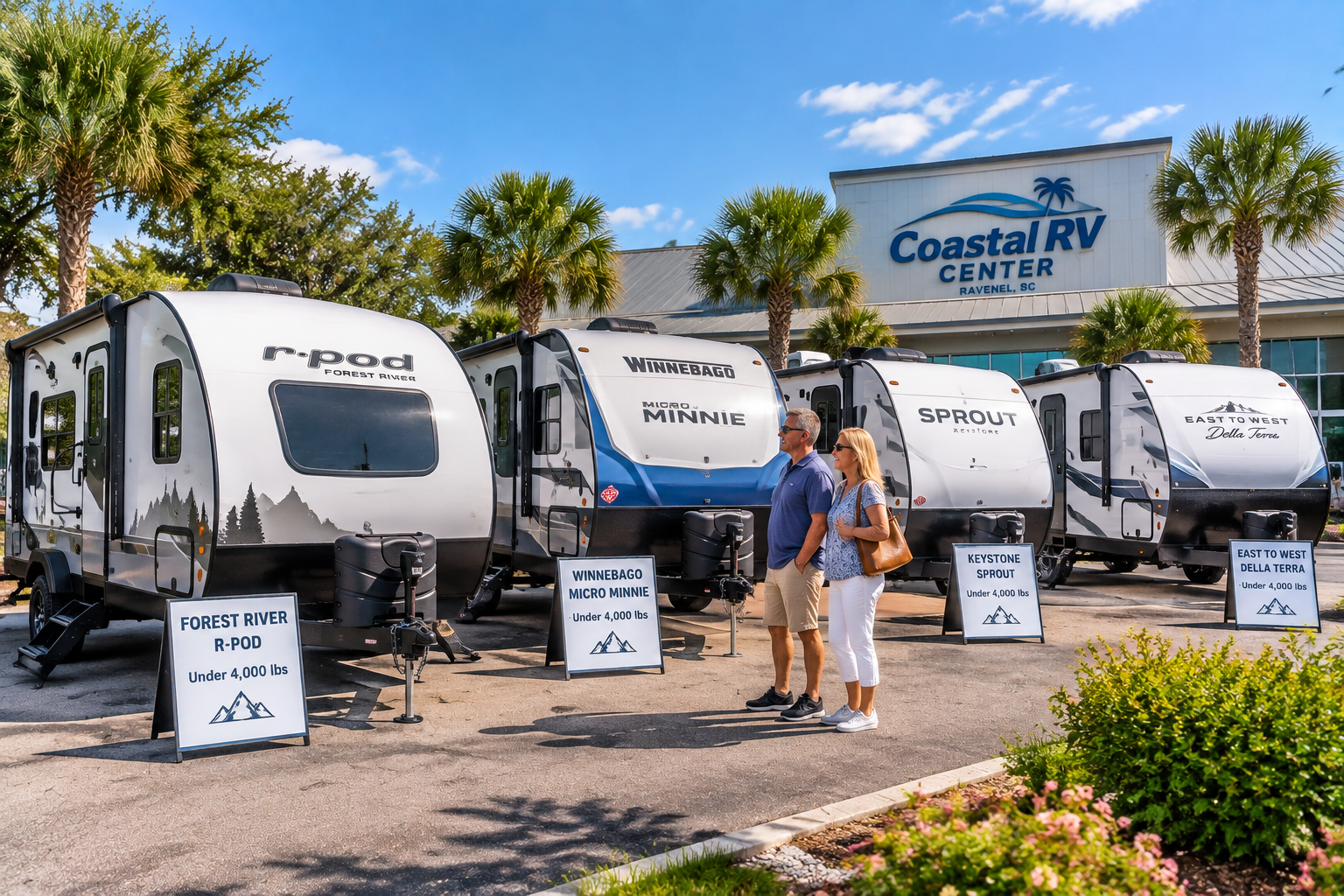
Lightweight travel trailers under 4,000 pounds offer freedom for owners with midsize vehicles, smaller trucks, and those prioritizing fuel economy without sacrificing comfort or functionality. These compact models sleep 2-4 people comfortably, include full bathrooms with shower systems, functional kitchens with refrigeration and cooking, quality furnishings, and modern amenities making them genuinely livable for weekends or extended trips. Coastal RV Center in Ravenel, South Carolina carries extensive lightweight travel trailer inventory from quality manufacturers including Forest River R-Pod, Winnebago Micro Minnie, Keystone Sprout, and East to West Della Terra, each offering distinct advantages for different camping styles and priorities. The "best" trailer depends on your specific needs, vehicle capacity, sleeping requirements, and comfort priorities, but multiple excellent options exist within the under-4,000-pound category providing outstanding value and genuine camping capability without requiring expensive truck upgrades.
Why Choose a Travel Trailer Under 4,000 Pounds?
Lightweight trailers open RV ownership to vehicle owners excluded from heavier models. If your SUV rates for 5,000-7,000 pounds towing capacity, heavier trailers leave no safety margin. A 3,500-pound trailer with realistic gear and water loads stays well within safe limits. This weight class makes RV ownership possible without vehicle upgrades costing $15,000-$40,000.
Fuel economy improves dramatically with lightweight trailers. Towing a 3,500-pound trailer behind a midsize SUV reduces fuel economy by roughly 20-30%, compared to 40-50% reduction with 8,000-pound fifth wheels. Over 50,000 towing miles annually, this difference equals thousands in fuel savings. Budget-conscious travelers recognize this advantage immediately.
Campground flexibility increases with smaller trailers. Many RV parks accommodate trailers under 30 feet preferentially, offering tighter-knit communities and premium sites. Smaller trailers navigate tight campground roads, narrow sites, and back-in locations where larger trailers cannot fit. This accessibility matters significantly when popular campgrounds fill quickly.
Maneuverability simplifies camping trips. Lightweight trailers back and maneuver easier than heavier models. Newer RV campers find smaller, lighter trailers less intimidating during their first trips. Experienced travelers appreciate reduced complexity and stress when navigating challenging camping situations.
Resale value remains strong for quality lightweight trailers. These models appeal to broad audiences—first-time buyers, downsizers, and efficiency-focused campers. Popular brands maintain better resale value than niche models, protecting your investment if future circumstances change.
What Brands Offer Quality Travel Trailers Under 4,000 Pounds?
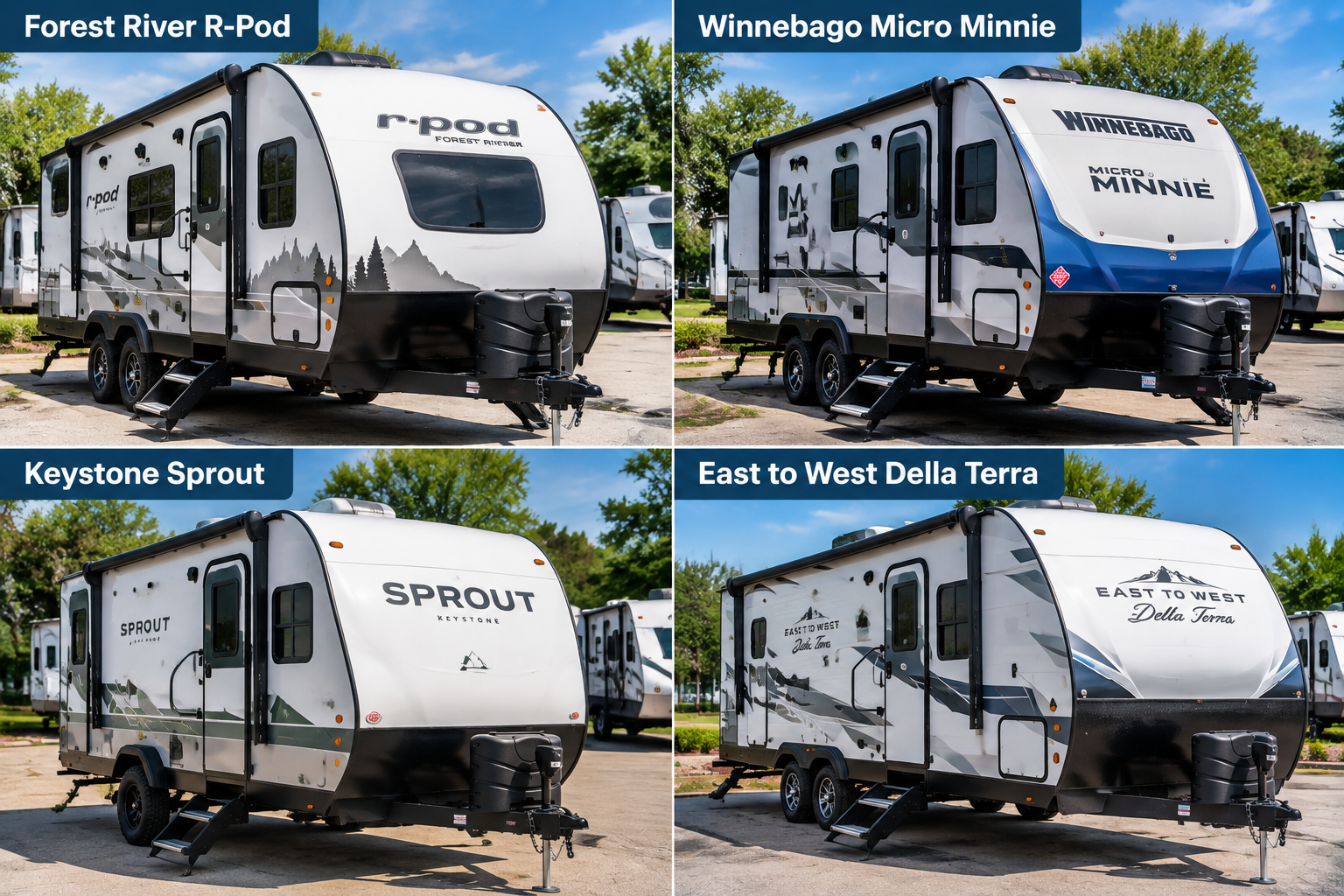
Forest River R-Pod represents the most popular lightweight option. R-Pod trailers weigh 2,600-3,649 pounds, sleep 2-3 people, include bathrooms with showers, functional kitchens, and surprising interior quality. Models range from ultra-compact 13-foot units to 20-foot versions. R-Pod's reputation for durability and value makes them the market's most recognized lightweight trailer. Browse R-Pod inventory at Coastal RV.
Winnebago Micro Minnie offers Class B motorhome-like comfort in towable form. These 17-21 foot trailers weigh 3,500-3,800 pounds and sleep 2-4 people. Superior interior quality, well-designed kitchens, and premium furnishings justify slightly higher pricing. Winnebago's 80+ year heritage provides confidence in construction quality and warranty support.
Keystone Sprout targets families and couples seeking lightweight functionality. Sprout trailers weigh 2,700-3,400 pounds in lengths from 13-16 feet. The brand emphasizes simple, straightforward design reducing weight while maintaining comfort. Smart layouts maximize sleeping options despite compact dimensions.
East to West Della Terra provides premium lightweight camping. These 20-24 foot trailers weigh 3,200-3,900 pounds and rival mid-size trailers in interior quality and comfort. Della Terra targets experienced campers willing to invest more for superior furnishings and clever storage solutions. These trailers resemble luxury motorhomes downsized to lightweight form.
Winnebago Access bridges compact and full-size trailers. Access models weigh 3,200-3,800 pounds while stretching 24-30 feet. They sleep 3-4 people with genuine living spaces beyond sleeping areas. Access trailers suit couples and small families prioritizing comfort without extreme weight penalties.
All these manufacturers carry inventory at Coastal RV Center, allowing side-by-side comparison before purchasing.
What Should You Consider When Choosing Lightweight Trailers?
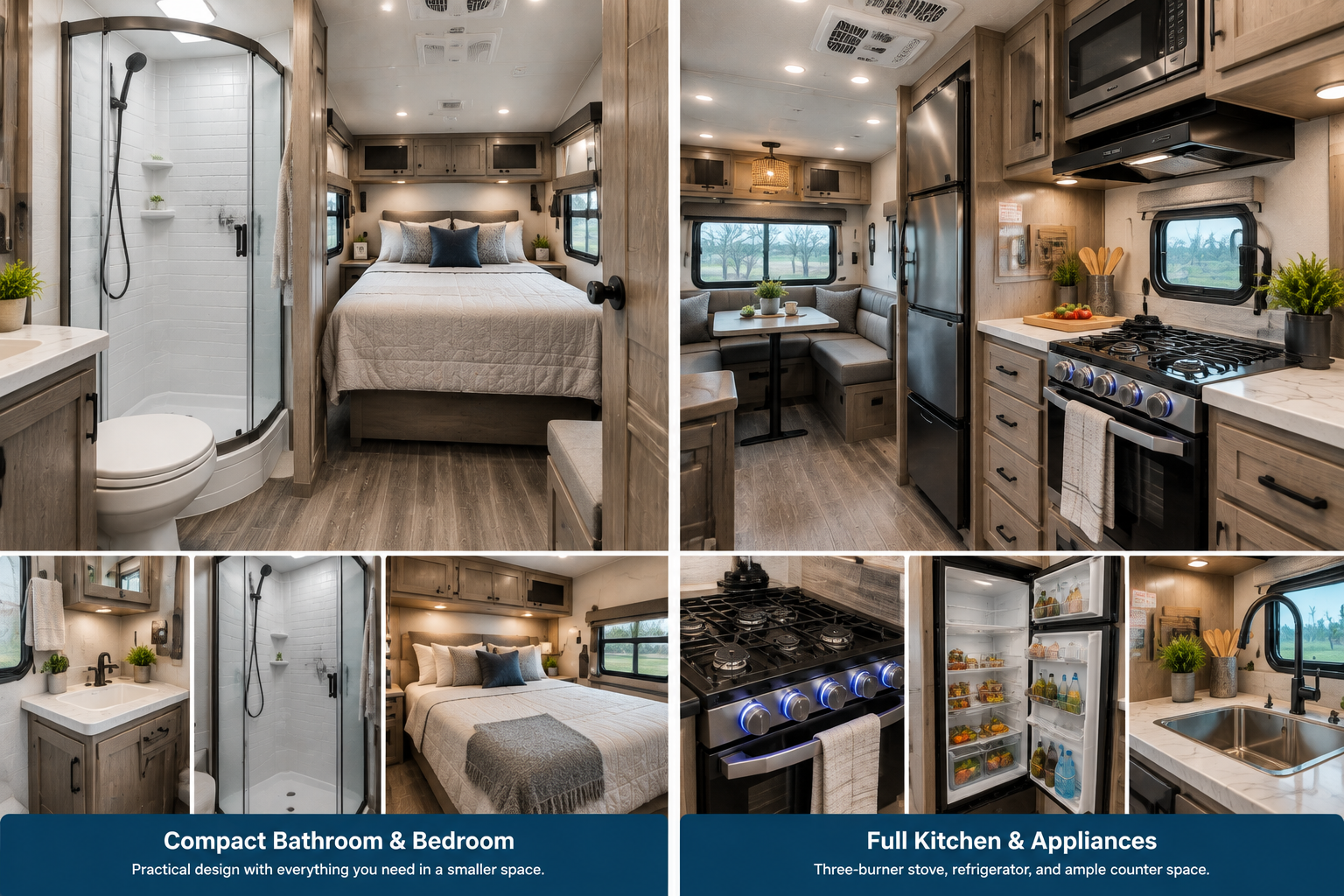
Sleeping arrangements vary significantly despite similar weights. Some lightweight trailers maximize sleeping capacity with convertible dinettes and overhead beds, sleeping 4 people in tight quarters. Others prioritize sleeping comfort with dedicated bedrooms, sleeping only 2-3 more spaciously. Determine your typical group size and whether occasional extra sleeping beats permanent comfort sacrifice.
Bathroom quality separates exceptional lightweight trailers from barely-adequate options. Quality models include separate shower enclosures, reasonable toilet positions, and ventilation preventing mold growth. Budget models squeeze toilets into awkward corners, create shower-over-toilet situations, and include minimal ventilation. Test your comfort level with actual layouts before purchasing.
Kitchen functionality determines meal-time enjoyment. Three-burner stoves with oven allow real cooking. Two-burner cooktops with microwave-only heat create meal limitations. Refrigerator size affects grocery shopping frequency. Counter space determines prep capabilities. Small kitchens don't require abandoning cooking entirely—they require accepting cooking style adjustments.
Dry weight versus loaded weight matters significantly. Manufacturers list dry weight (no water, propane, or gear). Realistic weight adds 300-500 pounds for fresh water, propane tanks, and personal belongings. Verify your vehicle can tow the loaded weight, not just dry weight. Experienced towing requires 1,500+ pounds payload reserve.
Manufacturer warranty provides peace of mind. Quality manufacturers (Forest River, Winnebago, East to West) back construction and systems appropriately. Budget brands offer minimal coverage. Extended warranty options cost $100-$300 annually and often pay for themselves through single major repairs.
Storage and organization challenge lightweight trailers. Limited cabinet space means creative packing. Successful lightweight trailer owners develop packing systems, utilize vertical storage, and accept leaving some items at home. Test storage solutions before committing—some find them acceptable, others find them frustrating.
Seasonal capability varies. Lightweight trailers typically include basic insulation suitable for spring/fall camping. Winter camping in northern climates requires specific models with superior insulation and heated tanks. Summer camping in southern regions creates no challenges. Match trailer seasonal capability to your intended use.
How Do Lightweight Trailers Compare to Compact Motorhomes?
Lightweight trailers versus compact motorhomes presents interesting tradeoffs. Class B motorhomes (van-based campervans) weigh 5,000-7,000 pounds but include drivable cabins allowing independent exploration and movement between campgrounds without hookup disconnections. Lightweight trailers require towing vehicles but provide better weight distribution and simpler towing mechanics.
Motorhomes cost significantly more—$40,000-$80,000 for quality Class B units versus $20,000-$40,000 for lightweight trailers. Motorhome fuel economy generally exceeds travel trailer fuel economy (12-18 mpg versus combined vehicle/trailer 15-20 mpg), offsetting higher purchase prices over extended ownership.
Motorhomes simplify solo travel—you're comfortable stopping for meals, changing clothes, or using facilities without concerning about trailer security. Travel trailers require towing vehicles remaining stationary during camping.
Lightweight trailers offer flexibility—your towing vehicle remains available for local exploration while your trailer stays safely at camp. Motorhome owners cannot separate their living space from their vehicle.
For couples and small families, lightweight trailers often represent superior value. For individuals seeking independence and single-vehicle convenience, motorhomes justify their premium pricing.
What Common Lightweight Trailer Mistakes Should You Avoid?
Purchasing beyond your vehicle's true capacity creates safety hazards and voids warranties. Don't trust salespeople claiming "your truck can probably handle this." Verify actual manufacturer towing ratings, subtract 2,000 pounds for real-world conditions, and stay within that limit comfortably. Exceeding capacity voids manufacturer warranties and potentially creates liability if accidents occur.
Underestimating necessary campground infrastructure requirements. Lightweight trailers still need 30-amp electrical service, fresh water hookups, and sewer access. Boondocking (dry camping without hookups) works for 2-3 days maximum with gray water capacity and battery power. Plan most nights at established campgrounds with full hookups.
Ignoring water system vulnerabilities in cold climates. Lightweight trailers' compact exteriors provide minimal insulation. Northern winter camping requires specific models with heated tanks, insulated pipes, and enclosed undercarriages. Standard lightweight trailers freeze solid when exposed to freezing temperatures overnight. If winter camping matters to you, specify winter-capable models.
Overestimating how comfortable tight spaces feel. Visiting a trailer showroom briefly differs significantly from living in 120-150 square feet for a week. Space that feels cozy initially becomes claustrophobic after days inside during bad weather. Rent similar trailers for 5-7 days before purchasing. This trial period reveals whether compact living suits your personality and camping style.
Neglecting to test weight distribution during loading. Improperly distributed weight (rear bias or side bias) creates dangerous sway and handling issues. Load trailers methodically, weighing front and rear separately to verify weight is distributed 50/50 front-to-back. Many new owners discover weight balance problems during their first trips.
Purchasing used models without professional inspections. Lightweight trailers experience heavy use (owners often take them camping frequently). Previous owners' maintenance habits determine remaining system lifespan. Inspect thoroughly for water damage, appliance condition, roof condition, and structural integrity before committing to purchase.
Why Choose Coastal RV for Lightweight Travel Trailers?
Coastal RV Center specializes in helping buyers find perfect RV matches regardless of vehicle type or budget constraints. Our selection includes extensive lightweight travel trailer inventory featuring models under 4,000 pounds from all major manufacturers.
Our family-owned dealership since 1978 means Julian and Todd, our owners, personally guide each purchase. Rather than pushing expensive models to maximize commission, we recommend trailers matching your actual vehicle capacity, camping style, and budget. This honest approach builds long-term customer relationships beyond single transactions.
Professional inspections ensure quality standards. Every used lightweight trailer undergoes thorough testing of all systems, water damage inspection, appliance verification, and structural assessment. We reject units with concerns—only properly maintained trailers reach our showroom.
Flexible financing options through multiple lenders accommodate various credit situations and down payment capacities. We handle paperwork professionally, simplifying title transfer, registration, and warranty processing.
Fair trade-in valuations enable upgrades from existing RVs. Accurate appraisals ensure appropriate value recognition, applied directly to new purchases. Whether upgrading to larger trailers or downsizing to lightweight models, trades streamline transitions.
Our Ravenel location at 6075 Savannah Highway places us conveniently on Highway 17, 12 miles south of Charleston, easily accessible from the Lowcountry and surrounding regions. Visitors from Georgia, North Carolina, and beyond find our dealership a convenient shopping and delivery destination.
What Specific Lightweight Models Should You Consider?
Forest River R-Pod RP-192 weighs 3,649 pounds, sleeps 3, includes shower bathroom, three-burner stove, refrigerator, and surprising interior quality. This model represents the sweet spot—compact enough for midsize vehicles, roomy enough for genuine comfort, and priced affordably. R-Pod's popularity means strong resale value and easy financing. Ideal for first-time buyers and couples seeking dependable lightweight camping.
Winnebago Micro Minnie 1700BH weighs 3,400 pounds, sleeps 2-3, and delivers premium furnishings rivaling motorhomes. Bunkhouse configuration sleeps additional occupants. The bunkhouse layout makes this model exceptional for families. Winnebago's reputation justifies slightly higher pricing.
Keystone Sprout 13RK represents the ultra-lightweight extreme at 2,700 pounds, sleeps 2-3, and maximizes space efficiency. This compact model suits couples prioritizing lightweight capability and fuel economy. Sprout's simple design reduces complexity and maintenance requirements.
East to West Della Terra 241BH weighs 3,400 pounds, sleeps 2-4, and emphasizes premium comfort despite lightweight construction. Full-size refrigerator, quality kitchen, and spacious bedroom justify premium pricing. Target experienced campers willing to invest more for superior comfort and furnishings.
Winnebago Access 24RB weighs 3,800 pounds, sleeps 3-4, and extends closer to full-size comfort than ultra-compact trailers. Longer bed, genuine living room seating, and quality appliances suit small families and couples prioritizing comfort.
Browse Coastal RV's complete lightweight trailer inventory online to compare models, specifications, and current pricing. Contact our team at (843) 564-1542 to discuss which model suits your needs, schedule test-drives, or arrange financing pre-approval.
Frequently Asked Questions
What vehicle can tow a 3,500-pound travel trailer?
Most modern pickups, many midsize SUVs, and larger cars with towing packages can safely tow 3,500-pound trailers. Verify your vehicle's owner's manual for maximum towing capacity. As a safety rule, keep actual loaded weight 30% below maximum rated capacity. If your vehicle rates 5,000 pounds, tow maximum 3,500 pounds loaded. Never exceed rated capacity.
Are lightweight trailers adequate for full-time living?
Lightweight trailers work for full-time living if you accept compact spaces and frequent hookup reliance. Extended boondocking (beyond 2-3 days) becomes challenging due to water and battery limitations. Full-time living requires frequent campground reservations with full hookups. Many full-timers successfully use lightweight trailers, accepting these constraints as lifestyle tradeoffs.
How much does a quality lightweight travel trailer cost?
New lightweight trailers cost $18,000-$40,000 depending on length, features, and brand. Used models cost 40-60% less depending on age and condition. Quality used trailers 5-7 years old cost $12,000-$25,000. Budget for additional expenses: hitch installation ($500-$2,000), insurance ($150-$300 annually), and initial maintenance.
Can you winterize lightweight trailers for cold-weather camping?
Standard lightweight trailers winterize but don't enable comfortable cold-weather camping. Insulation remains minimal, tanks freeze without specific protection, and heating capacity proves inadequate for sustained freezing weather. Winter-capable lightweight trailers (specific models from Winnebago, Forest River) include superior insulation, heated tanks, and enclosed undercarriages enabling freezing-weather camping. Specify winter capability when purchasing if cold-weather camping matters.
What's the difference between travel trailer dry weight and actual weight?
Dry weight excludes fresh water, propane, gear, and personal belongings—the empty shell only. Realistic loaded weight adds 300-800 pounds depending on water capacity, propane tank size, and how much you carry. Always calculate loaded weight before confirming your vehicle can tow safely. Manufacturers list dry weight in specifications—add realistic loads before purchasing.
How do lightweight trailers handle highway wind and weather?
Lightweight trailers experience more wind buffeting than heavier models due to their higher profile relative to weight. Crosswinds, trucks passing at highway speeds, and gusting affect trailers more than fifth wheels. This handling characteristic improves with towing experience. Use caution in sustained high winds (40+ mph). Avoid towing lightweight trailers during severe weather.
Should you buy a used lightweight trailer or new?
Used lightweight trailers offer exceptional value if inspected professionally. Depreciation hits hardest during the first 2-3 years—buying 5-7 year old models avoids this loss. However, verify previous owner maintenance carefully. New trailers provide manufacturer warranties and customization options, justifying higher prices for some buyers. Compare total value (warranty, condition, price) rather than choosing age alone.
What's included in typical lightweight trailer maintenance?
Annual maintenance includes propane system inspection, roof seal verification, appliance testing, brake system inspection, and tire condition checking. Most lightweight owners handle these checks themselves, reducing costs. Professional service costs $200-$500 annually for thorough inspections. Appliance replacement (water heater, refrigerator, stove) runs $1,000-$3,000 each when needed. Budget $500-$1,000 annually for maintenance and unexpected repairs.
Final Takeaway
Lightweight travel trailers under 4,000 pounds deliver genuine RV freedom for vehicle owners excluded from heavier models, prioritize fuel economy without sacrificing comfort, and simplify campground logistics through compact dimensions and weight. Quality manufacturers including Forest River, Winnebago, Keystone, and East to West build trailers proving lightweight construction never means cheap construction—these models rival larger trailers in amenities, durability, and owner satisfaction.
Coastal RV Center in Ravenel, South Carolina understands lightweight trailer ownership deeply. Our family-owned dealership carries extensive inventory matching various needs and budgets, provides honest guidance from owners who use these trailers themselves, and stands behind every sale through professional service and flexible financing.
Browse lightweight travel trailer models online to compare specifications and pricing. Contact Coastal RV Center at (843) 564-1542 or visit 6075 Savannah Highway, Ravenel, SC 29470 to speak with Julian or Todd about your specific vehicle, camping frequency, and comfort needs. Experience how lightweight trailers deliver freedom, fuel efficiency, and genuine camping capability without requiring expensive vehicle upgrades or sacrificing comfort and quality. Start your lightweight RV adventure with Coastal RV today.