
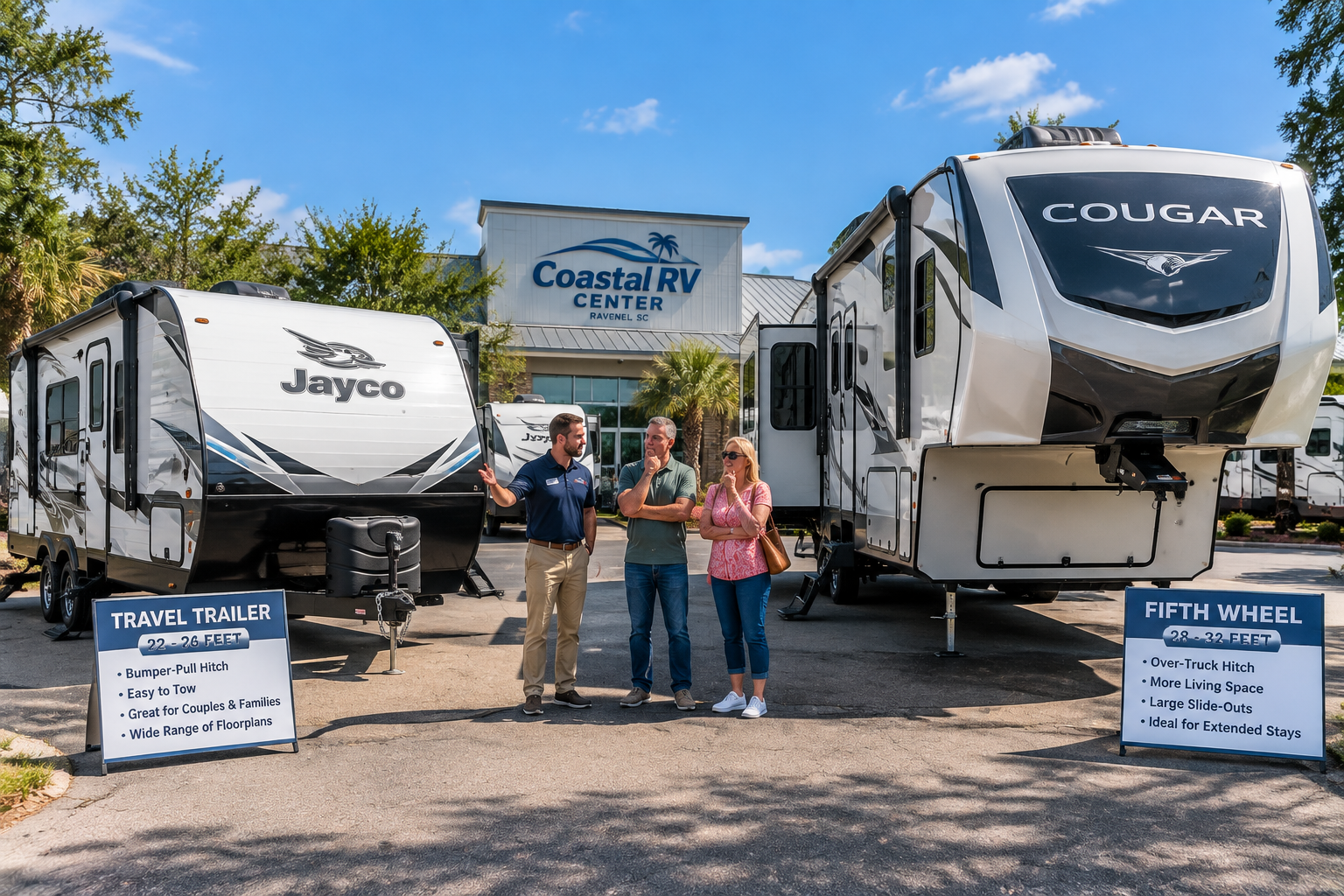
Travel Trailer vs Fifth Wheel: Which Should I Buy?
Travel Trailer vs Fifth Wheel: Which Should I Buy?
Travel trailers and fifth wheels both offer independent mobile camping with hitching convenience, but they differ significantly in towing requirements, interior space, cost, and handling characteristics. Travel trailers attach to your vehicle's bumper, require standard towing vehicles, and cost less upfront than comparable fifth wheels, making them ideal for first-time buyers and those with smaller trucks. Fifth wheels couple to pickup truck bed hitches, provide residential-quality interiors with superior stability and weight distribution, and justify higher prices through durability and comfort. The choice depends on your budget, truck capacity, towing experience, and camping frequency. Coastal RV in Ravenel, South Carolina helps buyers navigate this decision by showcasing both options with expert guidance matching personal needs to the perfect RV.
What Is the Key Difference Between Travel Trailers and Fifth Wheels?
The fundamental difference lies in how each type connects to your towing vehicle. Travel trailers use bumper or frame hitches, attaching to standard receiver hitches found on most vehicles equipped for towing. This means nearly any capable truck, SUV, or large car can tow a travel trailer, offering flexibility and lower vehicle requirements.
Fifth wheels use specialized hitch systems that mount directly into pickup truck beds. This over-the-truck connection provides superior stability, weight distribution, and maneuverability compared to bumper-pull arrangements. Roughly 60-70% of the fifth wheel's weight loads onto the towing truck's rear axle rather than hanging behind the bumper, creating fundamentally different handling characteristics and towing dynamics.
This structural difference cascades into everything else: fifth wheels typically offer more interior space despite similar lengths, deliver better ride quality, handle wind and curves more predictably, and last longer under stress. Travel trailers offer easier hookups, smaller vehicle requirements, and lower overall investment.
What Are the Towing Requirements and Vehicle Compatibility?
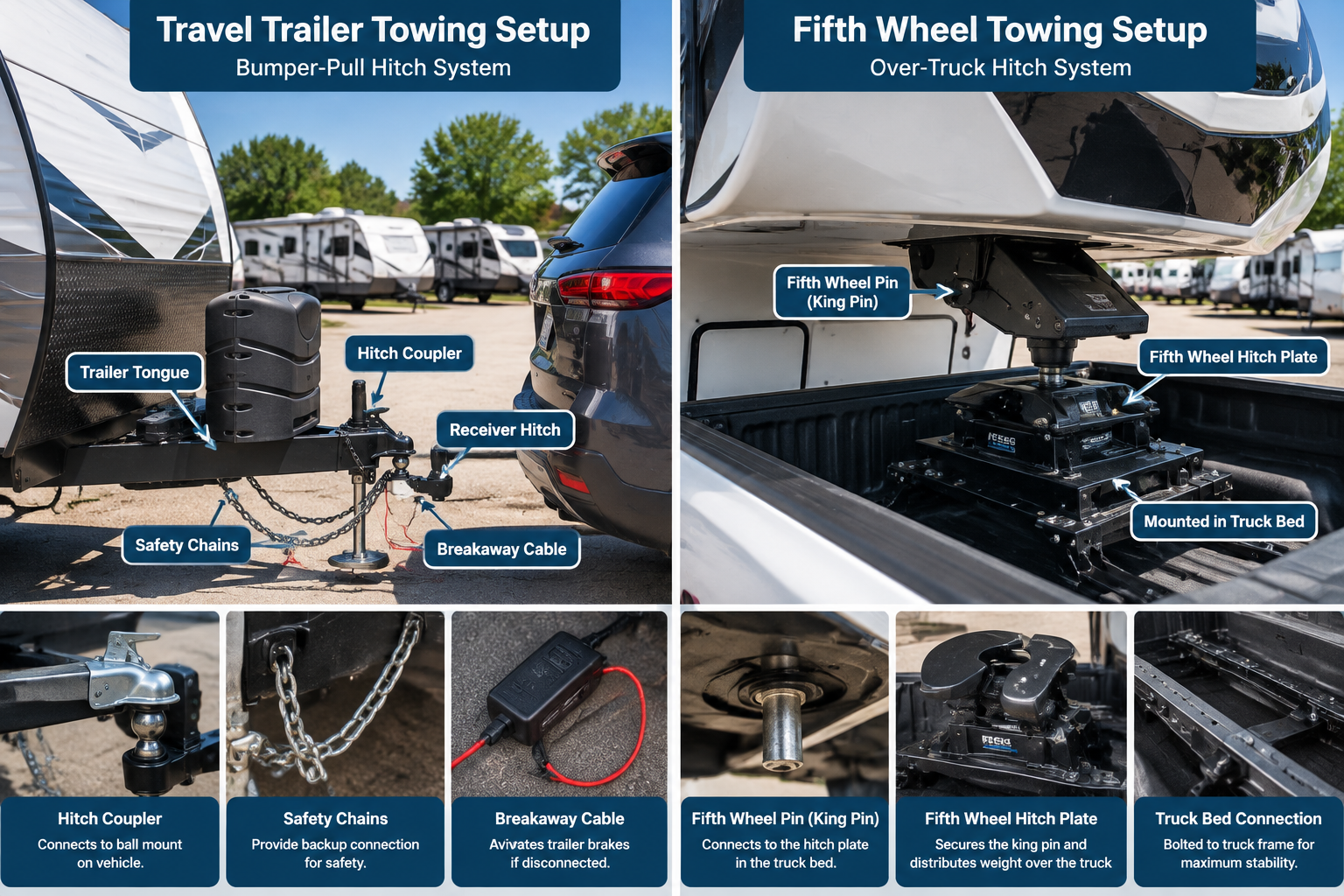
Travel trailers work with nearly any truck or SUV capable of towing their dry weight. A travel trailer weighing 3,500 pounds can tow behind many standard pickups, midsize SUVs, or even larger cars with adequate towing capacity ratings. Check your vehicle's owner manual for maximum towing and payload capacity. Most manufacturers conservatively rate towing ability—your vehicle can likely handle maximum weights without strain given proper brake systems and hitches.
Fifth wheels demand pickup trucks with bed-mounted hitch systems. Larger fifth wheels (30+ feet) require trucks with 3,500+ pound payload capacity and dual rear wheels. Smaller fifth wheels work with standard pickup trucks, though manufacturers recommend 1-ton trucks for units over 35 feet. This requirement eliminates compatibility with cars and SUVs entirely, restricting fifth wheel ownership to truck owners.
Before choosing between trailer types, verify your current vehicle's towing ratings. Travel trailers expand your options dramatically if you drive a midsize vehicle. Fifth wheels require truck ownership or purchasing one simultaneously—a significant additional investment. Some buyers choose travel trailers specifically to avoid upgrading their towing vehicle.
What Interior Space and Comfort Differences Exist?
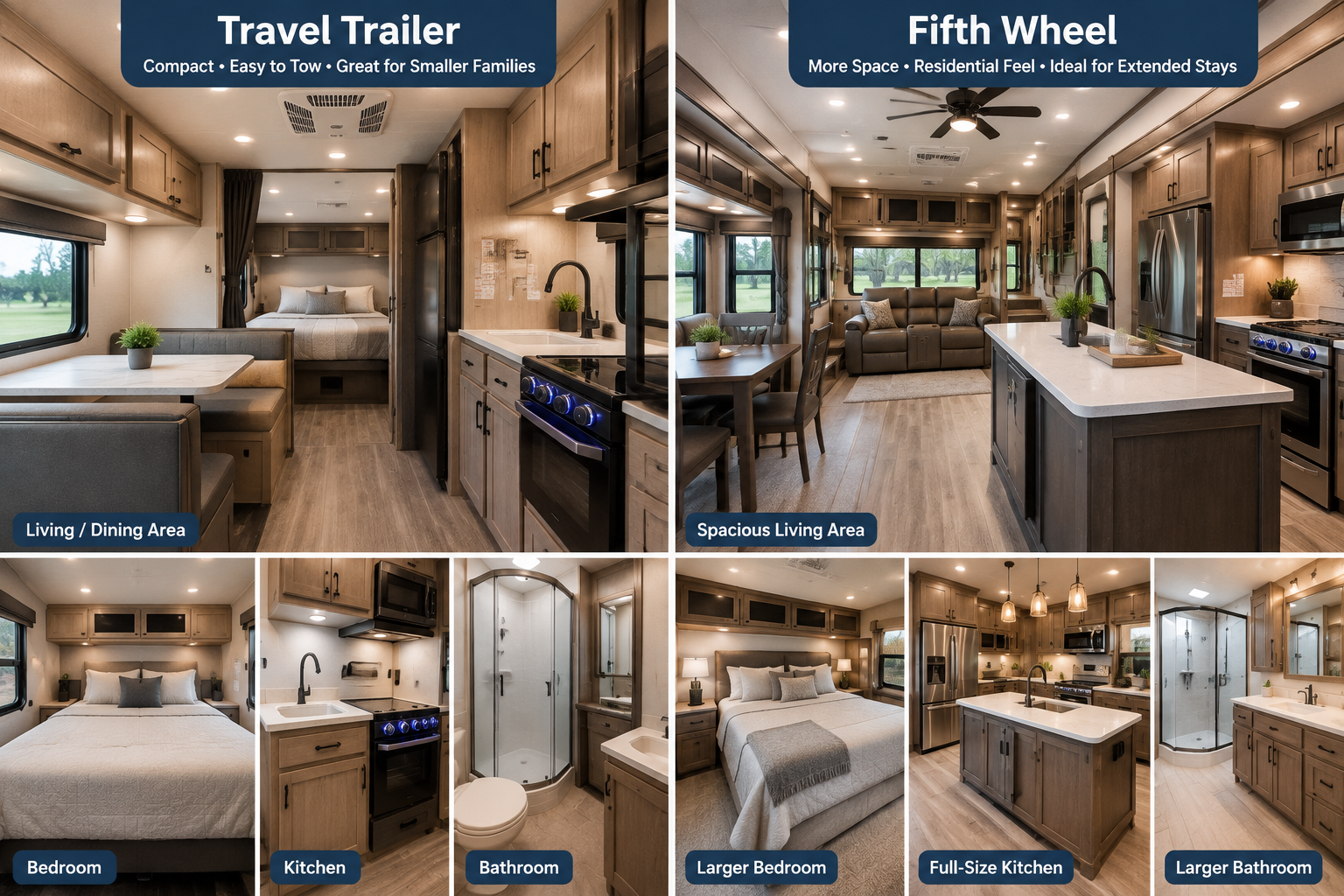
Fifth wheels typically provide 25-40% more usable interior space than travel trailers of similar length. A 30-foot fifth wheel often feels as spacious as a 35-foot travel trailer. This superior space results from the hitching mechanism: trailers waste length with tongue sections where the hitch connects. Fifth wheels eliminate this wasted space, maximizing livable area.
More interior space enables better bedroom layouts, larger bathrooms, larger kitchens, and expanded living areas. Sleeping four adults comfortably becomes easier in fifth wheels. Wet baths versus separate shower enclosures, full galleys versus tiny kitchenettes, and genuine living room seating rather than converted dinette areas come standard on fifth wheels.
Travel trailers make up ground through lightweight construction and strategic design. Modern travel trailers offer comfortable accommodations for couples or small families, with quality sleeping areas, functional kitchens, and adequate bathrooms. They're genuinely livable and suitable for regular camping. The question is whether you need premium comfort or functional comfort—both deliver genuine camping experiences.
For full-time living, extended trips (6+ weeks), or large families, fifth wheels justify their additional investment through comfort. For weekend getaways, occasional camping (5-15 times yearly), or couples without children, travel trailers meet needs effectively while reducing complexity and costs.
How Do Prices and Total Ownership Costs Compare?
Travel trailers typically cost 30-40% less than comparable fifth wheels. New travel trailers cost $15,000-$50,000 depending on size and features. Fifth wheels cost $25,000-$80,000+ for similar interior quality and length. Used markets show similar percentages—a five-year-old travel trailer costs considerably less than an equivalent fifth wheel.
However, comparing total ownership costs requires broader thinking. Fifth wheels hold value better (roughly 10-15% better depreciation than travel trailers), cost less to maintain (superior construction and durability reduce repairs), and often last longer before major systems fail (tanks, appliances, systems typically outlast travel trailer equivalents by 5+ years).
Financing also differs. Travel trailer loan rates typically run 1-2% higher than fifth wheel rates because lenders view trucks as collateral for fifth wheel loans. This interest rate difference matters significantly on 15-20 year loan terms.
Fuel economy impacts long-term costs substantially. Travel trailers add less wind resistance than fifth wheels, reducing tow vehicle fuel consumption by 10-20% compared to fifth wheel towing. On frequent trips, these fuel savings accumulate.
Insurance costs also differ—travel trailers carry separate insurance policies, while fifth wheels often add to truck insurance. Check with your insurance company before deciding, as actual costs vary dramatically between providers and situations.
What Are the Handling and Driving Experience Differences?
Travel trailers create noticeable weight behind your vehicle. Wind, trucks passing at highway speeds, and uneven roads transmit to the trailer, which transmits back to your driving experience. Smaller travel trailers (under 5,000 pounds) feel nearly imperceptible, while larger ones (15,000+ pounds) become the primary driving consideration. Backing becomes challenging—jackknifing risk increases with tongue weight, requiring patient maneuvering and experience.
Fifth wheels integrate with your truck fundamentally. Weight distributes across your truck's suspension rather than hanging behind your bumper. The result feels more like driving your truck—steering input changes are minimal, wind buffeting decreases noticeably, and backing becomes easier because the hitch location provides better turning geometry. Experienced drivers consistently report fifth wheel towing as superior to travel trailer towing.
For drivers uncomfortable towing or prioritizing stress-free driving experiences, travel trailers—particularly smaller ones—better suit your needs. For those towing frequently or covering substantial distances, fifth wheels provide noticeably better road feel and control, particularly in challenging wind or mountainous terrain.
Campground maneuvering also differs. Travel trailers require careful backing maneuvers in tight spaces. Fifth wheels' hitch design provides tighter turning radii, simplifying campground navigation. This matters significantly at crowded campgrounds with tight sites common in popular destinations.
What Common Purchasing Mistakes Should You Avoid?
Overlooking actual vehicle towing capacity represents the most dangerous mistake. Don't assume your truck can tow everything because it's new or looks substantial. Verify rated towing capacity in your owner's manual and add 20% buffer for safety—if your truck rates for 12,000 pounds, tow maximum 9,600 pounds. This mistake leads to transmission overheating, brake fade, and potential jackknifing accidents.
Underestimating intended camping frequency skews decision-making. Buyers anticipate weekly camping, then camp 5-10 times annually. Your needs might better suit rental options than ownership. Honestly assess whether you'll use an RV often enough to justify costs. Monthly camping justifies ownership. Annual camping suggests rentals.
Ignoring water system considerations creates cold-weather headaches. Trailers over 25 feet often include tanks positioned where winter freezing occurs. Insulation and tank placement significantly impact winterization complexity and effectiveness. Ask dealers specifically about freeze protection in northern climates if you'll camp in cold weather.
Choosing between types based purely on price ignores suitability. Many buyers purchase travel trailers they can barely tow, creating unsafe situations, then face unsellable inventory if circumstances change. Conversely, some purchase fifth wheels' superior comfort without confirming actual camping frequency, resulting in expensive toys gathering dust.
Neglecting inspection of systems before purchasing used models risks expensive surprises. RVs experience wear comparable to homes. Previous owners' maintenance habits determine remaining system lifespan. Skipping pre-purchase inspections by certified technicians costs significantly more than inspection fees.
Why Choose Coastal RV for Your Travel Trailer or Fifth Wheel?
Coastal RV Center in Ravenel, South Carolina carries comprehensive travel trailer inventory and fifth wheel selection from quality manufacturers. Our family-owned dealership since 1978 provides personalized guidance matching your actual needs rather than pushing inventory.
Julian and Todd, our owners, actively participate in every sale, ensuring you receive honest recommendations considering your vehicle, budget, camping style, and experience level. This hands-on approach means you'll speak with someone genuinely invested in your satisfaction, not rotating sales staff prioritizing commission.
Our certified service department provides professional inspections on all used inventory. Every RV undergoes thorough testing of mechanical, electrical, plumbing, and structural systems before customer delivery. We reject units with water damage, odors, or reliability concerns—only vehicles meeting our standards reach the showroom.
Flexible financing options through multiple lenders accommodate various credit situations and down payment capacities. We handle paperwork professionally, managing title transfer, registration, and manufacturer warranty requirements seamlessly.
Trade-in programs simplify upgrades from existing RVs. Fair appraisals ensure appropriate value recognition, applied directly to your new purchase. Whether upgrading from a travel trailer to a fifth wheel or downsizing after retirement lifestyle changes, trade-ins streamline transitions.
Our location in Ravenel, just 12 miles south of historic Charleston and easily accessible from Highway 17, serves the South Carolina Lowcountry and surrounding regions. Visitors from Georgia, North Carolina, and beyond find our dealership conveniently located for shopping, test-driving, and delivery.
What Should First-Time Buyers Know?
First-time RV buyers often overlook practical considerations that become apparent during ownership. Weight distribution impacts riding comfort—heavier trailers pulling at your bumper pitch your truck's front end up, creating rough ride quality on bumpy roads. This compounds over extended trips, creating fatigue and discomfort. Fifth wheels distribute weight onto your truck's frame, improving ride smoothness significantly.
Hitch setup costs money. Bumper-pull travel trailers cost $500-$2,000 for quality hitch installation, safety cables, and breakaway brake systems. Fifth wheel hitches run $1,500-$3,000 professionally installed. These installation costs factor into total purchase expenditure—don't forget them when budgeting.
Campground reservations fill quickly at popular destinations, particularly summer season and holiday weekends. Book 6-12 months ahead for premium locations. Winter camping in Florida and Arizona requires early bookings as well. This advance planning requirement exists regardless of trailer type but affects your camping flexibility.
Insurance costs surprise many new owners. RV insurance costs $150-$400+ annually depending on coverage type, deductible, and specific model. Shop multiple insurers—rates vary dramatically between companies for identical coverage. Some insurers significantly underwrite travel trailers while others prioritize fifth wheels, creating surprising cost differences.
Extended warranties make more sense for RVs than traditional vehicles because repairs costs escalate quickly. Appliance replacement runs $1,000+ per unit. Water heater replacement costs $1,500-$3,000. Roof repairs exceed $5,000 regularly. Extended warranty costs ($100-$300 annually) often pay for themselves through single major repairs.
Frequently Asked Questions
Are travel trailers truly easier to tow than fifth wheels?
Travel trailers tow somewhat easier—they're lighter, require standard hitches, and work with more vehicle types. However, they're physically harder to maneuver and control at highway speeds due to weight hanging from your bumper. Fifth wheels feel easier to drive once hooked properly, despite requiring truck ownership. Subjective difficulty depends on your towing experience and vehicle confidence.
Can I use a small SUV to tow a travel trailer?
Yes, many modern SUVs can tow 3,500-6,000 pounds—sufficient for smaller travel trailers (16-24 feet). Verify your specific model's towing capacity in your owner's manual. Many buyers tow successfully with midsize SUVs as long as they respect rated weight limits and add safety margin. Fuel economy decreases significantly, however.
Do fifth wheels last longer than travel trailers?
Fifth wheels typically outlast travel trailers by 3-5 years for major systems, assuming equivalent maintenance. Construction quality is often superior—tanks hold longer, appliances prove more durable, and structural integrity better withstands highway vibration. This durability justifies fifth wheel premium pricing for long-term owners.
What size fifth wheel works with a standard pickup truck?
Most standard pickup trucks can tow 20-30 foot fifth wheels comfortably. Check your truck's specifications carefully. Newer trucks (2000+) often handle 32-35 foot models, but payload capacity becomes the limiting factor above 30 feet. Don't assume—verify exact rated capacities before purchasing.
How much more do fifth wheels cost compared to travel trailers?
New fifth wheels cost roughly $10,000-$20,000 more than comparably-sized travel trailers. Smaller models narrow this gap slightly while luxury fifth wheels expand it dramatically. Used markets show similar percentages—five-year-old fifth wheels maintain better resale value despite higher depreciation dollars.
Can you sleep more people in fifth wheels than travel trailers?
Yes, fifth wheels typically accommodate larger groups. A 30-foot fifth wheel sleeps 4-6 people, while an equivalent-length travel trailer accommodates 4-5. The extra usable space enables separate living areas beyond sleeping, benefiting multi-family camping trips or extended travels with guests.
Is it difficult to camp in a travel trailer with four-wheel-drive trucks?
Relatively challenging. Pickup truck cabins sit higher than SUVs, creating awkward angles for bumper-pull hitch installation. This angle increases the "seesaw" effect—your truck front tilts up, creating bumpy rides and poor weight distribution. Many truck owners choose fifth wheels specifically to avoid this characteristic.
How often should you winterize travel trailers versus fifth wheels?
Both require identical winterization procedures—tank flushing, system draining, and insulation. Fifth wheels include extra complexity due to larger tank systems, but the principle remains the same. Northern climate owners should winterize both types before freeze season begins, regardless of camping frequency.
Final Takeaway
Choosing between travel trailers and fifth wheels requires honest assessment of your towing vehicle, camping frequency, comfort expectations, and budget constraints. Travel trailers suit budget-conscious buyers, vehicle-flexible travelers, and occasional campers. Fifth wheels justify their premium pricing through superior comfort, stability, durability, and value retention for dedicated RV enthusiasts and frequent travelers.
The "best" choice isn't universal—it's your choice, based on your specific circumstances. Coastal RV Center welcomes both perspectives. Our family-owned team helps you navigate this decision by showcasing complete travel trailer selection and fifth wheel inventory, discussing your specific needs honestly, and matching you with the RV where you'll create your best camping memories.
Visit Coastal RV Center at 6075 Savannah Highway, Ravenel, SC 29470, or call (843) 564-1542 to speak with Julian or Todd about your specific situation. Browse our complete new and used inventory online to see specific models and current pricing. Experience the Coastal RV difference—genuine guidance from family business owners who understand RV ownership deeply and stand behind every vehicle we sell.