
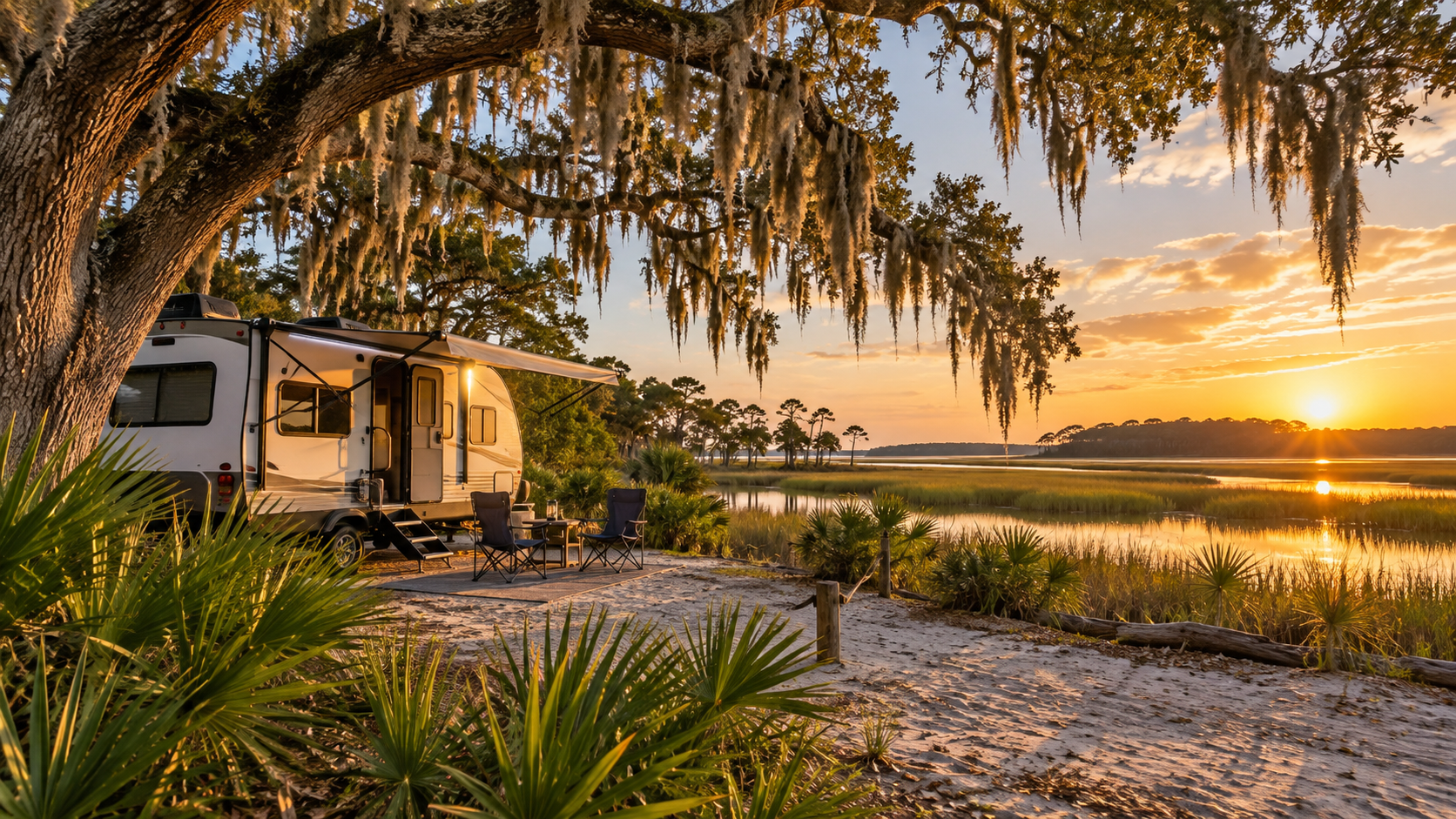
What is the best RV for camping on the South Carolina coast?
What Is the Best RV for Camping on the South Carolina Coast?
The best RV for camping on the South Carolina coast is a travel trailer or small Class C motorhome with strong air conditioning, moisture-resistant construction, and a manageable length for narrow Lowcountry campground roads. Coastal camping brings high humidity, salt air, sandy terrain, and summer storms, so the right RV needs to handle heat and moisture better than a standard inland camper. For most families and couples, a travel trailer between 24 and 32 feet strikes the best balance of comfort, towability, and campground compatibility.
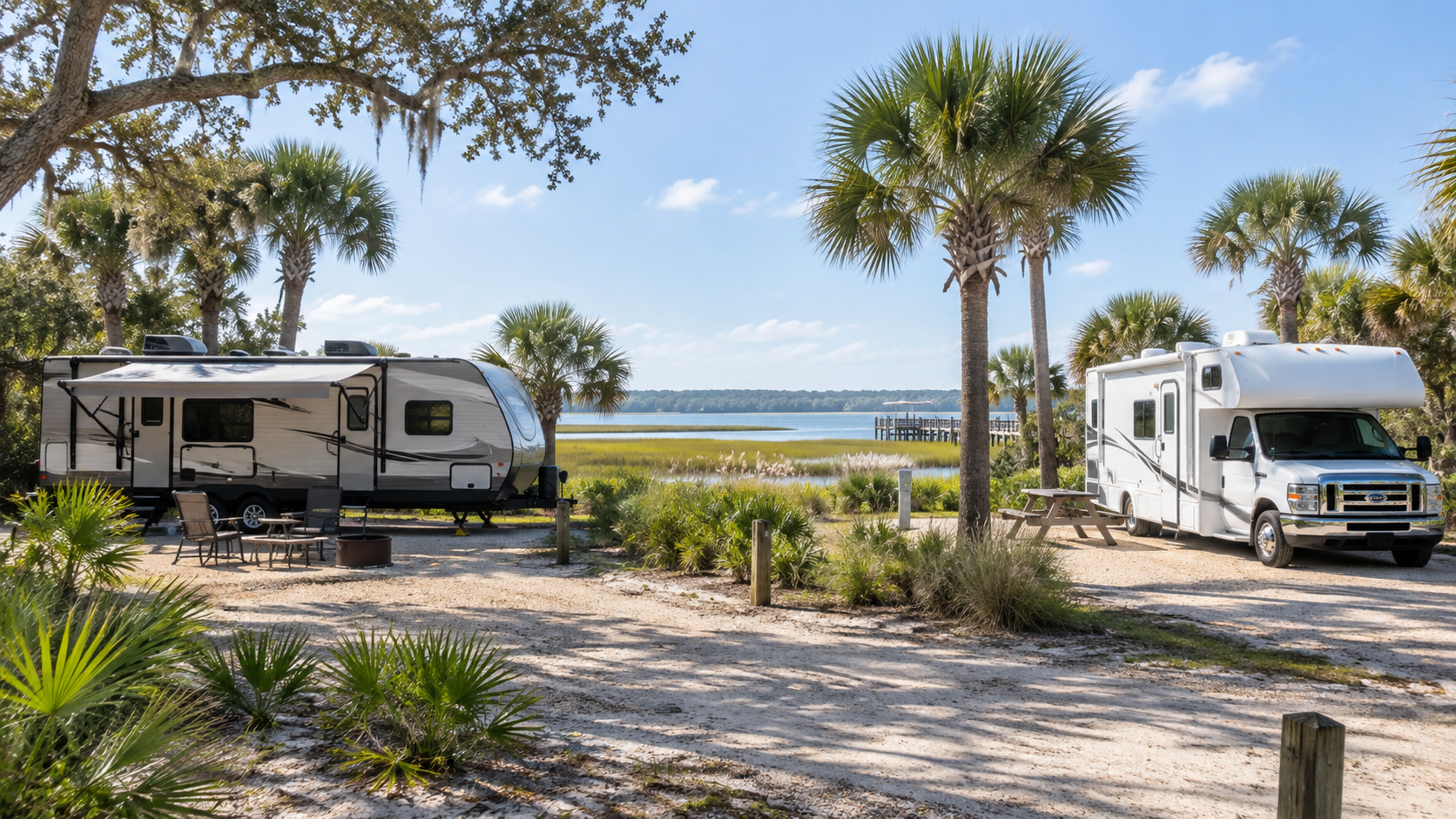
What Makes an RV a Good Fit for Coastal South Carolina Camping?
Coastal camping in South Carolina is different from camping in the mountains or the Midwest. The air along the coast, from Charleston down to Hilton Head and up toward Myrtle Beach, carries constant humidity and salt. That combination puts extra stress on seals, appliances, and roof materials.
A good coastal camping RV needs a few specific traits:
Strong, well-sized air conditioning, since summer heat combined with humidity makes a single 13,500 BTU unit feel weak in a 30-foot trailer
Sealed, moisture-resistant construction around windows, slide-outs, and roof seams
Adequate fresh water and gray/black tank capacity, since many Lowcountry campgrounds have limited full-hookup sites
A frame and suspension built to handle sandy, sometimes uneven campground roads near the water
RVs without these features tend to develop mold, soft flooring, or AC strain faster in a coastal environment than they would inland. This is one of the most common issues we see when a customer buys an RV suited for dry Western climates and brings it to the Lowcountry.
Which RV Type Works Best for South Carolina Beach Camping?
A travel trailer is generally the best choice for most South Carolina coastal campers, though the right type depends on group size, tow vehicle, and how you plan to use the RV.
Travel trailers are the most popular choice for coastal camping in South Carolina. They tow well with mid-size and full-size trucks or SUVs, come in a wide range of floor plans, and are easier to maneuver into tight, tree-lined campsites common at places like Edisto Beach State Park or Huntington Beach State Park. A 24 to 30 foot travel trailer with a bunkhouse layout works well for families, while smaller 20 to 24 foot models suit couples who want easier towing and parking.
Fifth wheels offer more living space and better weight distribution, which matters for longer stays. They require a heavier tow vehicle, usually a three-quarter or one-ton truck, and their height and length can be a challenge at some coastal campgrounds with lower tree canopies or shorter pull-through sites. Fifth wheels are a strong option for retirees or long-term coastal campers who plan to stay put for weeks at a time.
Class C motorhomes appeal to buyers who want a self-contained unit without towing a separate trailer. They handle well on coastal highways and offer easy setup, though storage for beach gear, kayaks, or bikes is more limited than with a trailer.
Toy haulers are worth considering for buyers bringing paddleboards, bikes, or a golf cart, since the garage space converts into extra living or sleeping area once the gear is unloaded.
For most South Carolina coastal camping, a travel trailer between 24 and 32 feet offers the best combination of towability, interior space, and compatibility with Lowcountry and Grand Strand campgrounds.
What Should Buyers Consider Before Choosing a Coastal Camping RV?
Before buying an RV for South Carolina coastal camping, run through this checklist:
Air conditioning capacity. Look for at least one 13,500 BTU unit for smaller trailers, and consider a second AC unit or a 15,000 BTU unit for larger floor plans. Summer humidity along the coast makes cooling capacity more important than it might be in a drier climate.
Tank sizes. Confirm fresh water, gray water, and black water tank capacity. Many state park and county campgrounds near the coast, including several in the Charleston and Myrtle Beach areas, offer water and electric only, so larger holding tanks reduce how often you need to dump.
Construction and sealing. Ask about roof material, seam sealing, and slide-out gaskets. Fiberglass exteriors with properly sealed seams tend to hold up better against salt air and humidity than aluminum-skin units with older sealing methods.
Tow vehicle match. Match the RV's loaded weight to your truck or SUV's real towing capacity, not just the advertised maximum. Sandy or soft campground roads add resistance that isn't obvious on paper.
Length and turning radius. Many older Lowcountry and barrier island campgrounds have narrower roads and tighter site spacing than newer inland RV parks. A shorter, more maneuverable RV often has more site options along the coast.
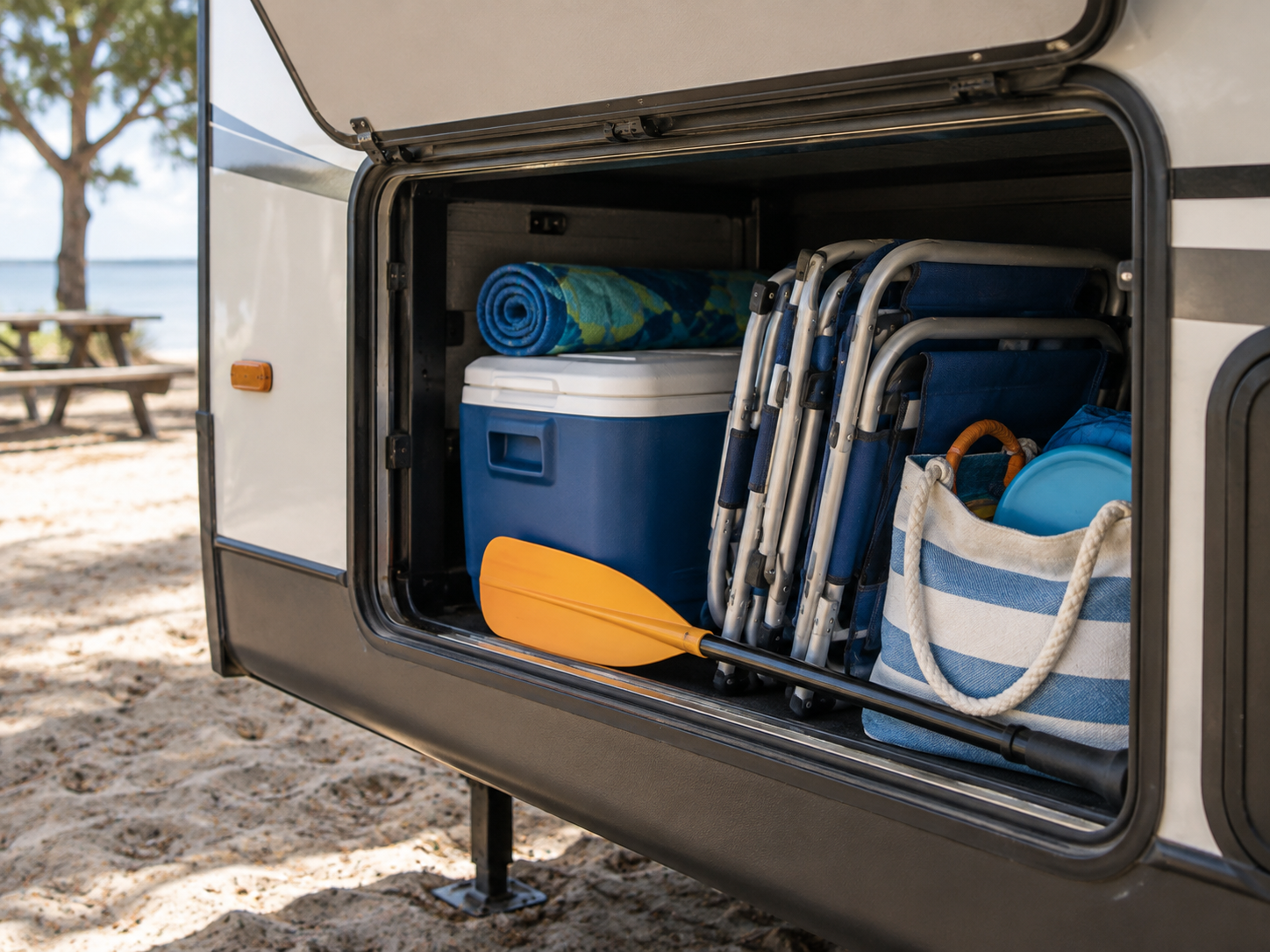
Storage for gear. Beach chairs, coolers, kayaks, and fishing rods add up fast. Exterior pass-through storage or a toy hauler garage keeps gear organized and out of the living space.
What Mistakes Do Buyers Make When Choosing a Coastal Camping RV?
A few recurring mistakes show up when customers shop for a coastal camping RV without local guidance.
Underestimating cooling needs. Buyers coming from inland or northern climates often assume a single small AC unit is enough. South Carolina coastal summers combine heat and humidity in a way that makes marginal cooling systems struggle, especially in units over 28 feet.
Ignoring humidity and moisture control. Without a dehumidifier, moisture-resistant flooring, or good ventilation, RVs left closed up during humid stretches can develop musty odors or mold faster than expected. This is especially true for units stored outdoors near the coast during the off season.
Buying too much RV for the tow vehicle. Sandy campground roads and coastal wind add real-world resistance that isn't reflected in a manufacturer's towing chart. An RV that tows fine on flat highway can strain a tow vehicle in soft or uneven terrain.
Overlooking campground restrictions. Some coastal parks limit RV length, require specific hookup configurations, or restrict slide-out extension due to site spacing. Checking these details before buying helps avoid disappointment after purchase.
Skipping a walk-through of tank and appliance access. Coastal campers dump tanks and run appliances more often due to longer stays and humidity. Easy access to these systems saves time and frustration during a trip.
How Coastal RV Center Can Help You Choose the Right RV for the SC Coast
At Coastal RV Center in Ravenel, just south of Charleston on Highway 17, we work with buyers every week who are shopping specifically for coastal camping in the Lowcountry and along the Grand Strand. Our team can walk you through floor plans, tank capacities, and AC configurations that hold up well in this climate, based on what we see come through our service department year after year.
If you already own an RV and are dealing with humidity-related wear, roof seal issues, or AC performance problems, our service department can also inspect and address those issues before your next trip.
Browsing new and used inventory in person is one of the best ways to compare real-world size, storage, and layout differences between models. Our team can also walk you through financing options and trade-in value if you are upgrading from a current unit.
Frequently Asked Questions
What size travel trailer is best for South Carolina coastal camping?
A travel trailer between 24 and 30 feet works well for most coastal campers. This range offers enough interior space for a family while staying maneuverable on narrower Lowcountry campground roads. Couples or solo campers often do well with something closer to 20 to 24 feet for easier towing and more site availability.
Do I need a special RV for humid coastal weather?
You do not need a specialized RV, but certain features matter more along the coast. Look for strong air conditioning, sealed roof seams, and moisture-resistant flooring or materials. These features help the RV hold up better against the humidity and salt air common along the South Carolina coast.
Is a travel trailer or fifth wheel better for camping near Charleston?
A travel trailer is usually the better fit for camping near Charleston because it is easier to maneuver into tighter, tree-lined sites and works with a wider range of tow vehicles. Fifth wheels offer more space and are a good option for longer stays, but they require a heavier truck and more site clearance.
How much does a good coastal camping RV cost?
Pricing varies widely based on size, age, and features. Smaller used travel trailers can start well under $20,000, while new mid-size travel trailers with stronger AC systems and better sealing often fall in the $25,000 to $45,000 range. Larger fifth wheels and motorhomes cost more depending on length and amenities.
Can I camp on the beach in an RV in South Carolina?
Most South Carolina beaches do not allow RV camping directly on the sand. Instead, campers stay at nearby state parks, county parks, or private campgrounds close to the coast, such as those near Edisto Beach, Huntington Beach, and Myrtle Beach, then walk or drive a short distance to the shore.
What RV features help the most with salt air and moisture?
Sealed slide-out gaskets, fiberglass or aluminum exteriors with quality seam sealing, adequate ventilation, and a properly sized air conditioning system all help reduce the impact of salt air and humidity over time. Regular roof and seal inspections also make a significant difference in how well an RV holds up.
Final Takeaway
Choosing the best RV for camping on the South Carolina coast comes down to matching the unit to the climate, not just the destination. A travel trailer or small Class C motorhome with solid cooling, sealed construction, and manageable length handles Lowcountry humidity and narrow campground roads better than an RV chosen without those factors in mind. Fifth wheels and toy haulers can also be excellent choices depending on your tow vehicle and how you plan to use the RV.
If you are ready to compare floor plans in person, browse our current inventory or stop by our Ravenel location to talk through what fits your camping style and tow vehicle. Our team can also help with financing questions or a trade-in if you are upgrading your current RV.